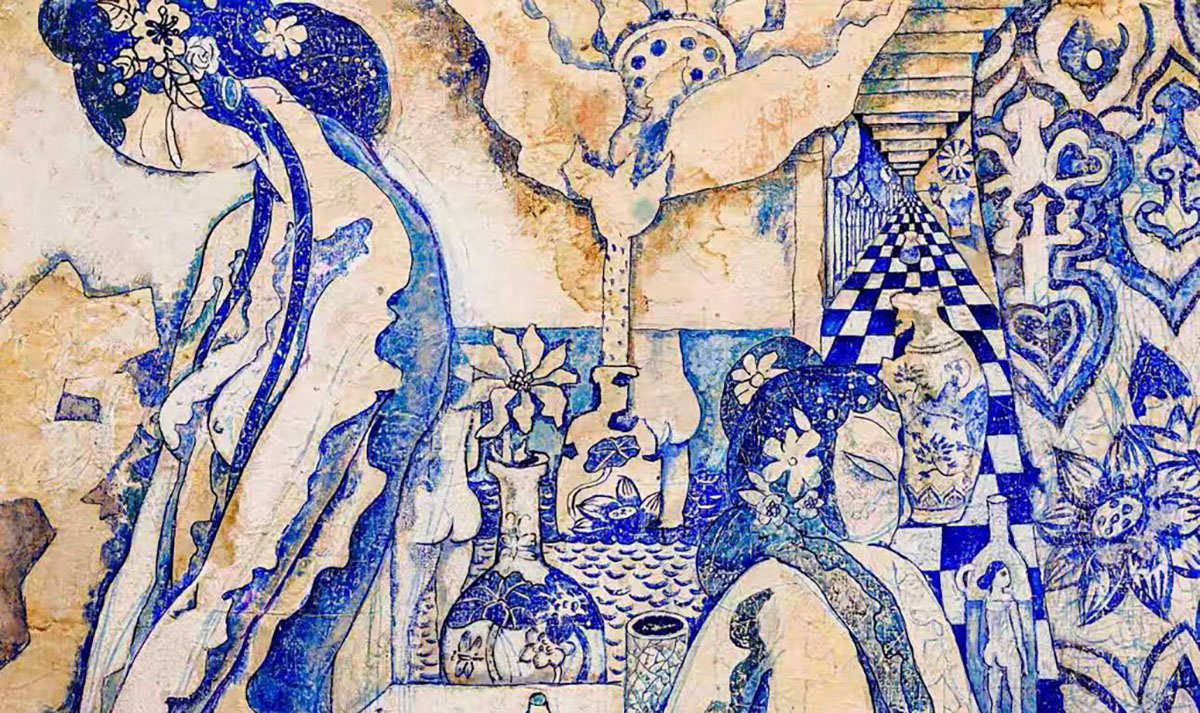
Growing up during a time of sweeping political and cultural change in China, Huang YI Min developed an artistic perspective deeply connected to memory, atmosphere, and emotional reflection. Her work does not focus on documenting reality in a literal way. Instead, her paintings operate as layered spaces where personal experience, historical awareness, and imagination quietly intertwine. Through years of observation and introspection, Huang has built a visual language attentive not only to physical surroundings, but also to the emotional climate that shapes everyday life and human experience.
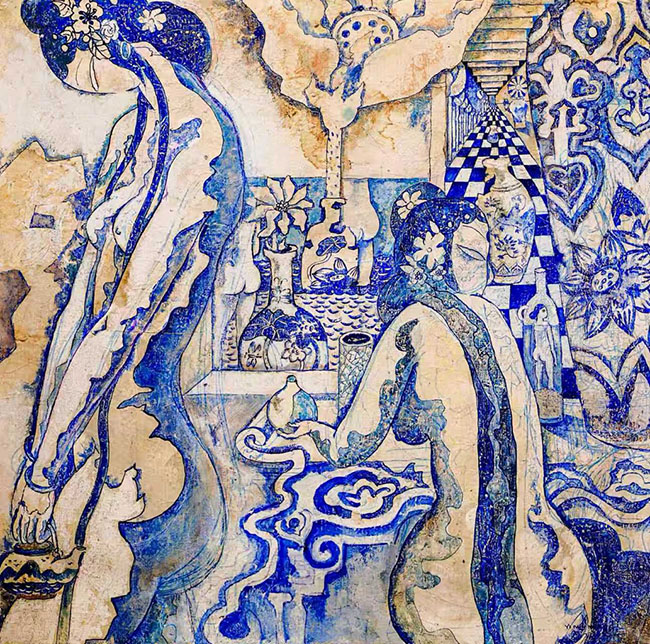
After completing her studies in fine arts at Beijing Normal University, Huang continued refining her artistic direction through sustained practice and exploration. Her move to the United States in 1997 introduced another dimension to her work, placing distance between herself and the cultural landscape that had long informed her identity. Rather than weakening that connection, migration intensified her reflection on memory, belonging, and cultural continuity. Her paintings often exist between worlds, bringing together Eastern and Western influences, lived reality and inner imagination, historical references and personal recollection. These elements coexist naturally within her compositions, giving the work a sense of intimacy while remaining tied to broader cultural histories.
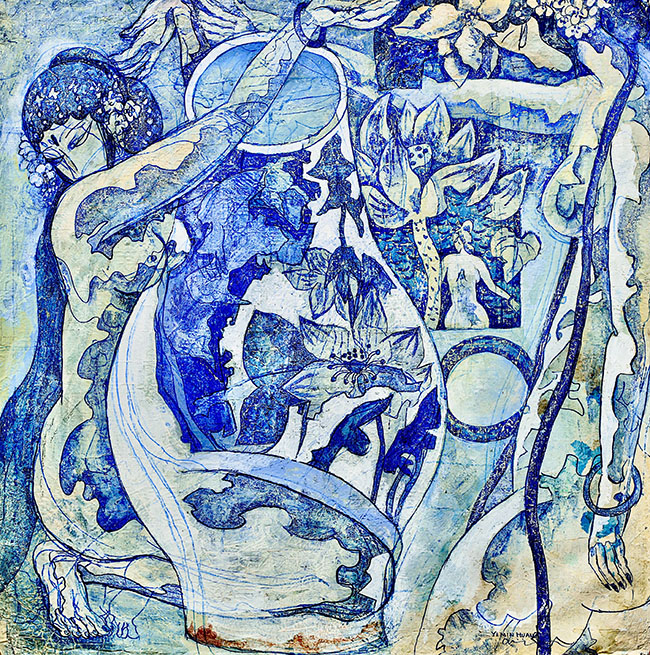
Among Huang’s most distinctive series is Blue and White Life, created in New York between 2003 and 2006. Produced in mixed media on paper, the series centers on the visual and symbolic relationship between traditional Chinese blue-and-white porcelain and the female body. Through these works, Huang reflects on femininity, beauty, identity, and the ways cultural values become embedded within objects and visual traditions.
The series emerged from Huang’s interest in how the female form has historically been approached differently in Chinese and Western art. While Western traditions have often emphasized direct anatomical representation, Chinese aesthetics have frequently relied on suggestion, symbolism, and indirect expression. Huang draws from this sensibility by allowing porcelain forms to stand in for the body itself. The rounded contours of ceramic vessels echo human curves, creating an association that feels restrained yet deeply sensual.
Rather than depicting the female body openly, Huang allows it to surface gradually through shape, movement, and composition. The porcelain vase shifts beyond its functional role and becomes a symbolic extension of human presence. Through this transformation, Huang connects the body to ideas of cultural memory, emotional inheritance, and quiet resilience. The relationship between vessel and figure reflects a longstanding Chinese aesthetic tradition in which beauty is communicated through implication and atmosphere rather than direct exposure.
Blue-and-white porcelain also carries profound historical meaning within Chinese culture. It is associated with craftsmanship, refinement, domestic life, and centuries of artistic continuity. By pairing these forms with feminine imagery, Huang creates a dialogue between personal identity and collective cultural memory. In her paintings, porcelain becomes more than decoration. It becomes a container for history, fragility, endurance, and transformation, much like the human body itself.
Visually, the series moves fluidly between abstraction and representation. Some works appear almost dreamlike, where blue decorative patterns dissolve into flowing forms and fragmented figures. Others retain clearer references to porcelain vessels and bodily structure. Huang’s layered textures, soft tonal shifts, and fluid linework create images that feel suspended between recollection and fantasy. The paintings often resemble memories resurfacing imperfectly, shaped as much by emotion as by observation.
A quiet tension also runs throughout the series. Porcelain is delicate and vulnerable, yet capable of surviving across centuries. Huang brings a similar quality to her treatment of the female figure. The works suggest refinement without fragility, softness without weakness. Both the vessel and the body become carriers of lived experience, absorbing emotional histories and cultural expectations while continuing to endure.
Creating this series while living in New York added another layer of meaning to the work. Distance from China appears to have deepened Huang’s reflection on cultural identity and artistic heritage. Instead of approaching traditional symbols with nostalgia alone, she revisits them through the perspective of migration and memory. The paintings become meditations on displacement, continuity, and the emotional complexities of existing between cultures.
What gives Blue and White Life its lasting resonance is its subtlety. Huang does not rely on overt storytelling or fixed symbolism. Instead, she creates contemplative visual spaces where meaning develops gradually through association, atmosphere, and emotional tone. Viewers are invited to reflect on the quiet relationships between body, object, memory, and history.
Throughout her artistic journey, Huang YI Min has consistently explored the blurred boundary between imagination and reality, between private memory and shared cultural experience. In Blue and White Life, this balance becomes especially nuanced. Porcelain transforms into a metaphor for the human body, while the body itself becomes a vessel carrying traces of history, identity, and remembrance. Through restrained imagery and layered symbolism, Huang creates works that feel deeply personal while continuing to resonate far beyond the individual experience.