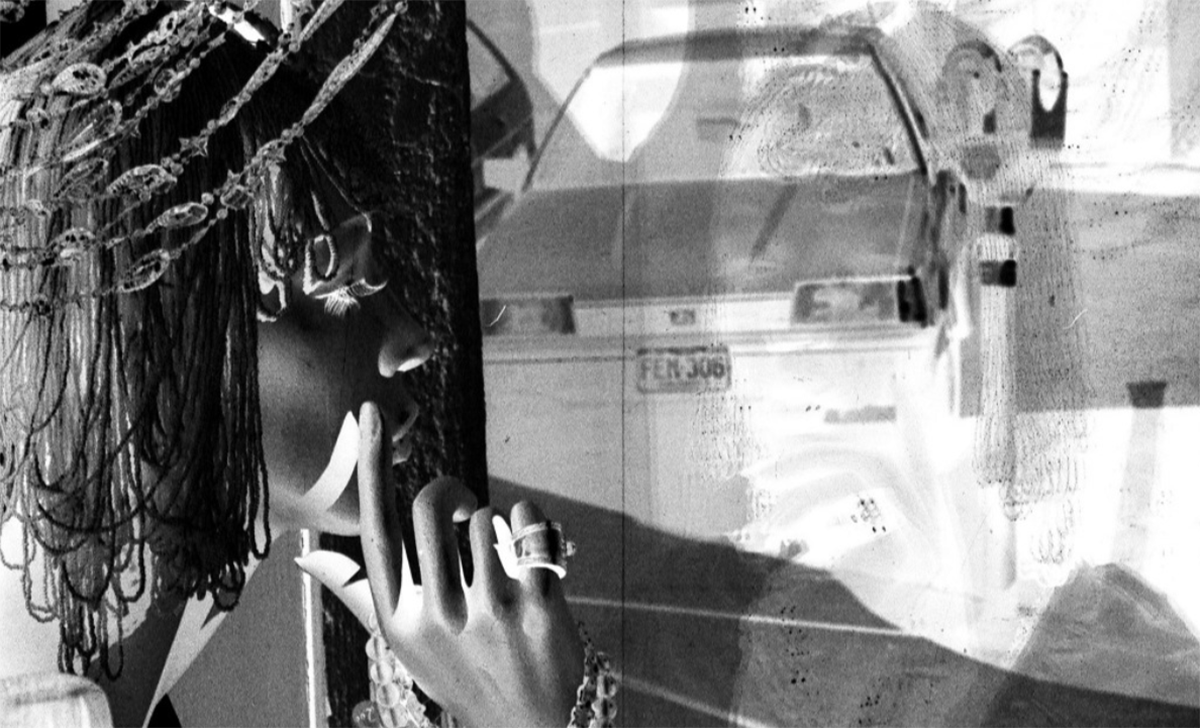
Canadian artist Allan Wesaquate draws on memory, dreams, and lived experience to make images that move between observation and imagination. His paintings bring bold colour, simplified forms, and textured surfaces into compositions that suggest a story without settling on a single account of it. A shape might recall something familiar while remaining difficult to name; a change in colour can shift the mood of an entire scene. This openness gives viewers room to bring their own associations to the work. Wesaquate’s interest in how images hold experience also extends to photography. A photograph records what stood before the camera, but it can take on another life when the artist revisits it years later. One image, photographed through a store window in Durango, Colorado, and retouched in Photoshop in 2010, shows how an ordinary encounter can remain available for further thought and change.
The Durango Photograph
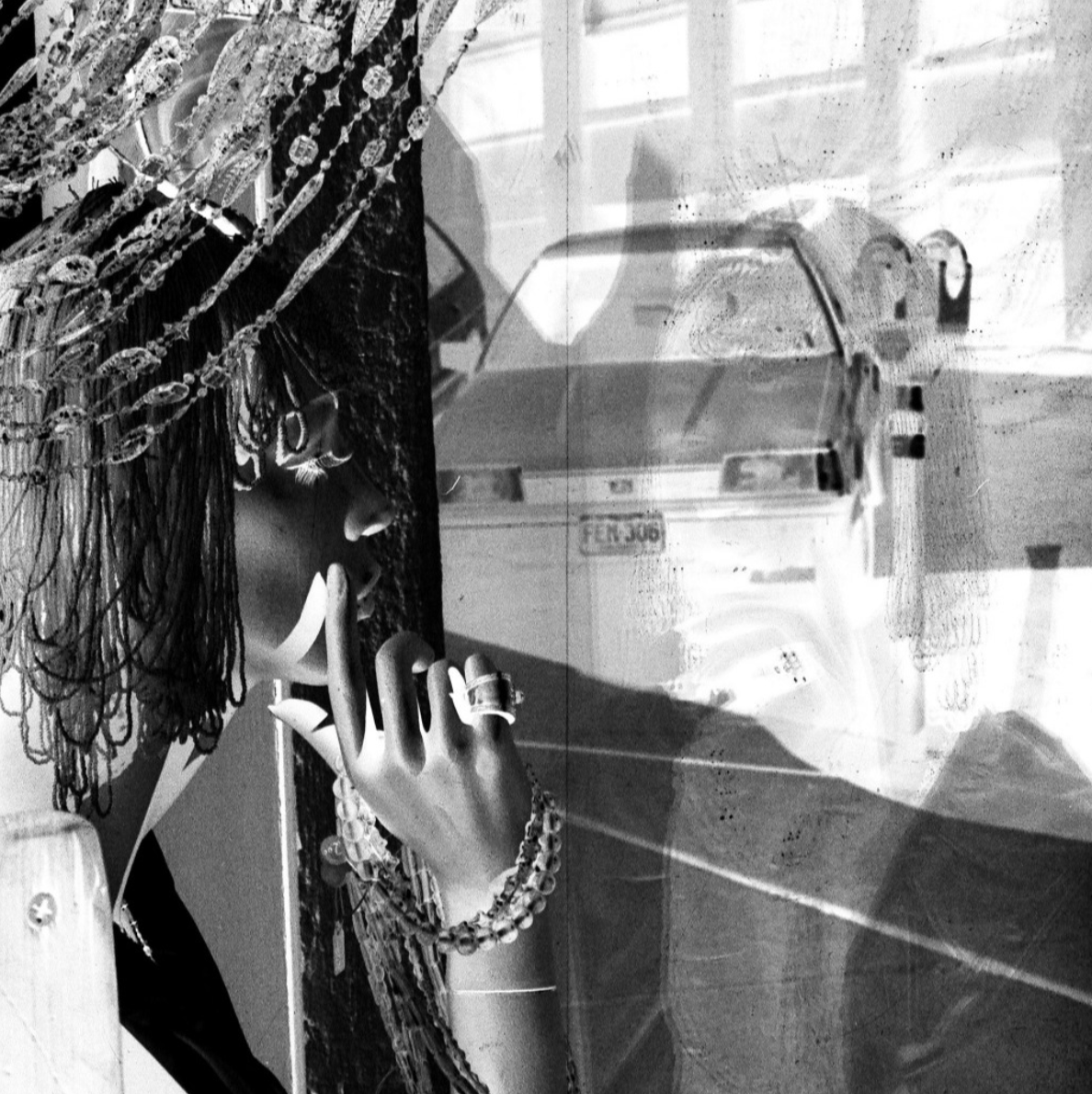
The photograph began with a pause in front of a store window in Durango, Colorado. Wesaquate noticed something worth photographing during an otherwise ordinary moment. The window placed a pane of glass between him and his subject, making the act of looking part of the image’s story. What he saw belonged to a public display, arranged for passersby, yet his decision to photograph it turned that passing encounter into a personal record.
Years later, he returned to the photograph and retouched it using Photoshop in 2010. The time between taking the picture and editing it matters. By then, the moment in Durango could no longer be experienced in the same way. The store window may have changed, and the circumstances of his visit had passed. What remained was the photograph and Wesaquate’s opportunity to look at it again. Retouching gave him a way to respond to the image from a different point in his life.
That second encounter invites us to think about what a photograph preserves. A camera can record a scene, but it cannot hold everything surrounding the moment: why the artist stopped, what drew his eye, or what he remembered when he later opened the file. Those parts of the experience can change with time. The 2010 edit brought a later decision into contact with the earlier observation, allowing the image to carry traces of both moments.
The work’s relationship to a store window also raises questions about display and attention. Windows are designed to catch the eye, but most people see them briefly and move on. Wesaquate did something different when he took the photograph. He kept an image of a temporary arrangement, then returned to it years after its original purpose had ended. The photograph asks what happens when something made for a quick glance receives sustained attention.
Retouching can alter how such a scene is encountered. An adjustment to an image may guide the eye or change its atmosphere, though the details of Wesaquate’s edits are not specified. What is known is that he chose to work on the photograph again in 2010. That choice makes the later act of looking central to the work. The image is connected to a place and a moment, but it also reflects the artist’s decision to revisit what he had kept.
This movement between observation and reconsideration connects the photograph to Wesaquate’s broader practice. His paintings draw from personal experience while leaving space for imagination. Here, the photograph provides a record of something he encountered, and the later retouching opens that record to another stage of interpretation. The two processes need not serve the same purpose. Taking a picture can be an immediate response; returning to it after years can become a slower inquiry into why it still holds his attention.
The photograph has never been shown in an exhibition. That detail gives its history a quieter scale. It has existed as an artwork without the public setting that often shapes how a work is discussed. Its importance need not depend on an exhibition record. For Wesaquate, keeping the image and choosing to revisit it were already meaningful acts within his practice.
We do not need to know every object visible in the window to understand the questions the photograph presents. It began with an encounter in Durango and changed when Wesaquate worked on it again in 2010. Between those moments lies the experience of remembering: retaining an image, seeing it with older eyes, and deciding that it still has more to offer. The photograph allows a brief observation to continue well beyond the day it was made.