Julian Jollon is an American multidisciplinary artist whose creative journey reflects a remarkable intersection of artistic exploration, scientific knowledge, and personal transformation. Trained in Fine Arts, Photography, and Painting, Jollon originally envisioned a career devoted to visual expression. However, his professional path led him into Hospital Epidemiology, where he spent many years studying disease prevention and protecting human health. This experience broadened his understanding of human vulnerability and the complexities of everyday existence.
A significant turning point came when Jollon underwent a liver transplant, profoundly changing his perspective on mortality, resilience, and the value of time. Returning to his artistic practice with renewed purpose, he developed a distinctive approach centered on overlooked experiences, unexpected beauty, and human connection. Through photography and visual experimentation, Jollon explores the emotional significance of ordinary objects, encouraging viewers to discover compassion, dignity, and meaning in places often forgotten by society.
Butterfly Memories: A Poignant Reflection on Humanity and Remembrance
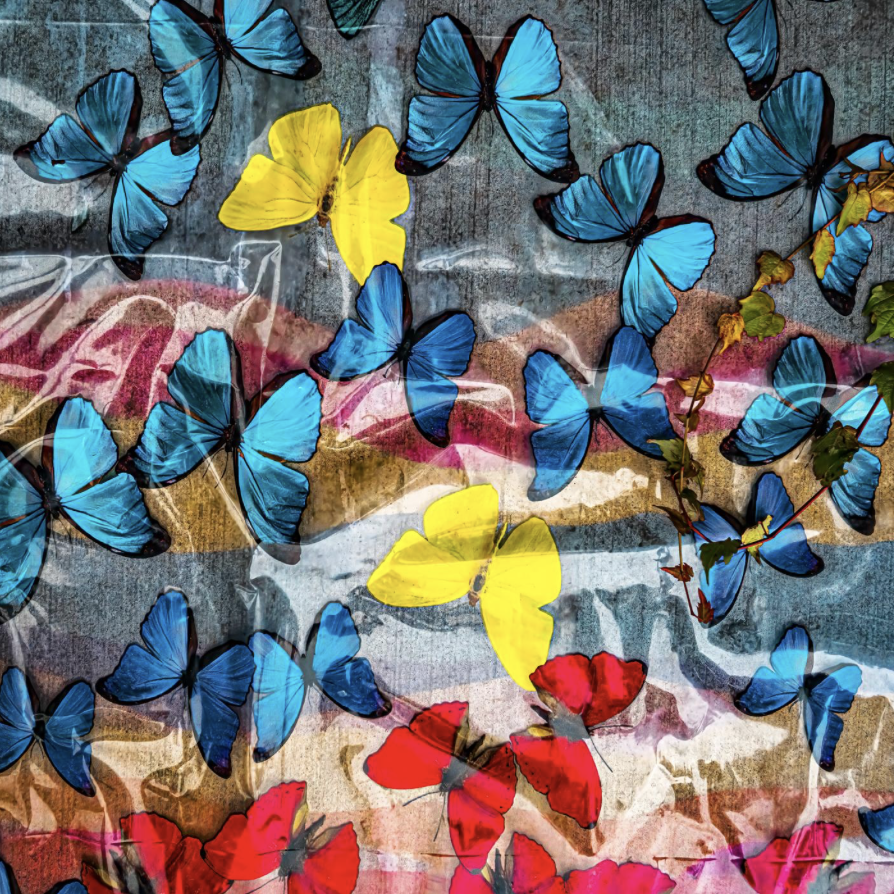
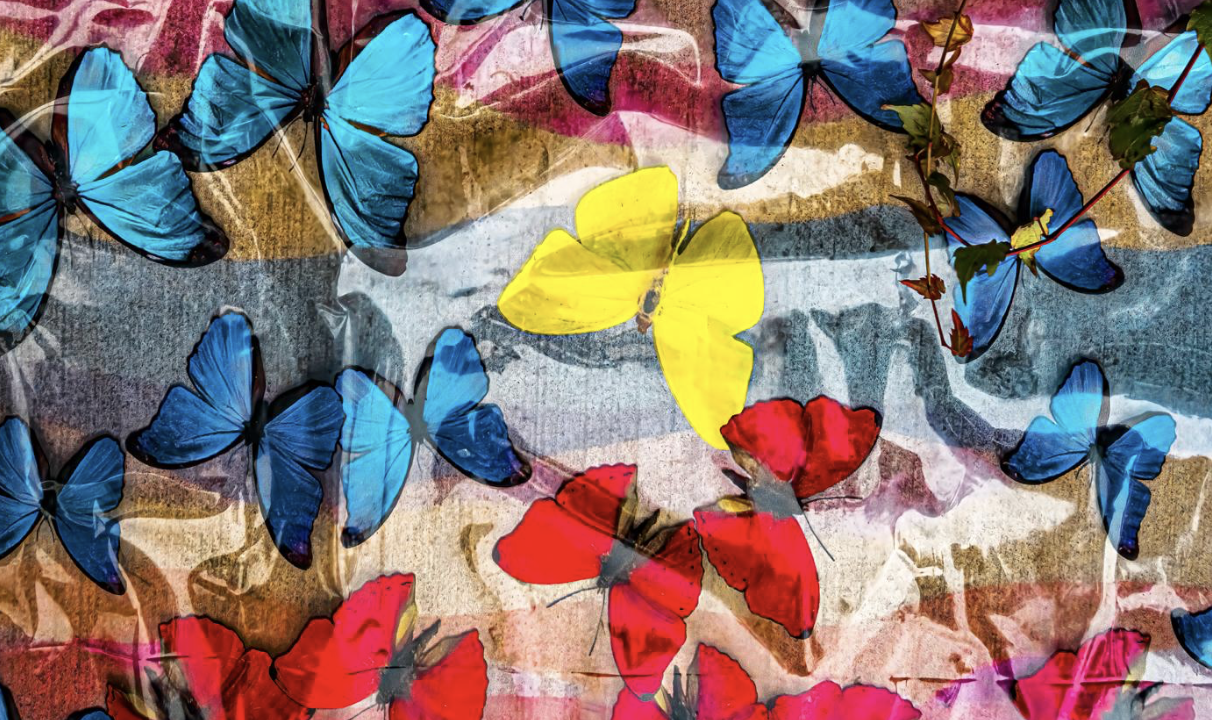
In Butterfly Memories, Julian Jollon presents a deeply moving photographic work that transforms an ordinary object into a powerful symbol of compassion, social awareness, and human resilience. The image features a colorful plastic shower curtain decorated with butterflies, originally used as a makeshift blanket and rain shelter by an Indigenous man experiencing homelessness in Seattle. What began as a practical means of survival eventually became an unexpected memorial dedicated to the Black Lives Matter movement.
Through Jollon’s observant eye, this humble object takes on extraordinary emotional significance. The butterfly-covered curtain represents more than protection from the elements; it becomes an expression of solidarity, remembrance, and the human desire to communicate hope amid adversity.
The memorial was positioned across from a Seattle Police Department precinct during a period of widespread demonstrations against racial injustice. Its location created a striking contrast between institutional authority and the quiet expression of an individual living on society’s margins. While protests attracted international attention, this modest sidewalk installation offered a personal and intimate response to the same historical moment.
Visually, Butterfly Memories is defined by the tension between beauty and hardship. Delicate butterflies in vibrant shades of blue, red, and yellow appear against a soft pink background, creating an atmosphere of movement, tenderness, and optimism. Yet the circumstances surrounding the curtain reveal a considerably darker reality.
Nearby, an alley littered with discarded needles reflects the challenges of addiction, homelessness, and urban neglect. Against this environment, the colorful butterflies become symbols of fragile hope. Their brightness suggests that even within difficult circumstances, the human spirit can retain its capacity for imagination, empathy, and meaningful expression.
Butterflies traditionally symbolize transformation, renewal, and freedom. Within Jollon’s photograph, these associations acquire a particularly poignant meaning. The curtain itself undergoes a transformation, shifting from a discarded household object into a protective covering and ultimately a public memorial. This progression reflects the possibility of discovering new purpose in objects and experiences that might otherwise be dismissed.
Equally significant is the identity of the memorial’s creator. Although experiencing homelessness and addiction, the man demonstrated profound sensitivity toward the suffering of others. His decision to create a tribute to the Black Lives Matter movement reveals an awareness of social injustice and a desire to participate in collective remembrance.
Jollon’s work challenges viewers to reconsider conventional ideas about artistic authorship and recognition. Creativity does not necessarily require formal training, expensive materials, or institutional approval. Sometimes, the most meaningful artistic expressions emerge spontaneously through personal experience and emotional necessity.
The story behind the photograph becomes even more touching through Jollon’s attempt to find the man responsible for the memorial. After witnessing the installation, the artist searched the nearby alley, hoping to offer him lunch and personally acknowledge his thoughtful gesture. Unfortunately, his efforts were unsuccessful.
This absence introduces a haunting dimension to the work. The memorial remains visible through photography, yet its creator disappears from the narrative. His physical absence raises questions about society’s tendency to overlook vulnerable individuals, even when their actions demonstrate extraordinary humanity.
The accompanying poetic interpretation reinforces these themes through imagery of colorful wings, battered plastic, concrete shadows, and prayers for justice. References to George Floyd connect the memorial to a wider history of grief, protest, and the continuing pursuit of equality.
Ultimately, Butterfly Memories transcends traditional documentary photography. It becomes a meditation on dignity, compassion, and the importance of recognizing humanity in unexpected places. By preserving this temporary memorial, Jollon gives lasting visibility to an anonymous individual’s expression of solidarity.
Through this emotionally resonant work, Julian Jollon reminds us that beauty can emerge from hardship, creativity can flourish beyond conventional boundaries, and even the smallest gestures of compassion can carry profound meaning. Butterfly Memories stands as a testament to the enduring power of remembrance and the quiet resilience of the human spirit.